Observations about the universe, life, Lausanne and me

Showing posts with label reading. Show all posts

Friday, March 25, 2011

Ugh. News.

The reporting about the Fukushima nuclear incident following the earthquake in Japan has been nothing short of atrocious. Even the BBC, normally my go-to place for serious world news, succumbed to inept comparisons with Chernobyl, gibbering headlines about 'melt-downs' and 'radioactive drinking water'.

Der Standard, a normally quite serious Austrian newspaper (with the best online-presence by far) even gobbled excitedly about a 'Super-GAU' - GAU is a german acronym for grösster anzunehmender Unfall, or worst-case scenario.

And on Wednesday this:


20minutes is a Swiss free-of-cost newspaper, so no aspirations of quality here, but still: The headline screams 'Le nuage radioactif passe sur la suisse', or 'Radioaktive cloud passing above Switzerland'. True, they do say (on page 2) that the radioactivity poses no danger to anybody in Switzerland, but still. Can you imagine a more lurid and sensational headline? Is a bit of journalistic integrity too much to ask for?

Wednesday, January 19, 2011

Kindle

I got my new toy two days ago: Amazons Kindle, a Christmas present from my parents. Do I like it? Let me put it like this: If you are going to read books electronically, do it on an e-ink device. The difference to an LCD screen is amazing - it really looks like (albeit glossy) paper. You quickly get used to the page-refresh, which rapidly blanks the page before displaying a new one - this eliminates 'ghosting', where you can see some remnants of the old page because the electrophoresis in the pixels wasn't complete. The refresh only takes a fraction of a second, anyway.

Don't get me wrong, I love reading real books, but my book-shelf real estate is limited, and has run out some time ago. Plus, there is something neat in having a couple of hundred books stored on a device that weighs only a couple of hundred grams.

Close-up of Kindle display

I do hope e-ink continues to make advances, especially in terms of the refresh-rate, for I would love to see it used as a display for tablet PCs, phones and the like. Yay progress!

Thursday, July 2, 2009

True Atheism

or: why I wanted to build an iBible, and why the bible is not a real book.

A couple of weeks ago a friend of mine (hey Chruss!) married. And he and his wife-to-be had a religious as well as a civil ceremony. Since I was invited, I had about two hours of hymns (sung badly by the mostly non-religious guests), sermon and ceremony to look forward to - catholic weddings are an involved affair. Naturally, my atheist mind turned to how to avoid being bored out of my mind, and thus the idea of the iBible was born - a hollowed-out bible where I could hide my iPhone in, thus pretending to follow the ceremony or something while reading something more interesting.

Unfortunately I did not have enough time to put my nefarious plan into action, so I had to suffer like the sinner I am. But, last weekend, I decided to build the damn thing anyway(read all about it here), because you never know when the next wedding will sneak up on you.

My plan was to buy a nice hard-cover bible, and hollow it out, so I went to the local flea-market to look for one. Unfortunately, they were fresh out of bibles. Loads of excellent-looking, antique hard-cover books, but no bible. So I turned around to leave, thinking to myself: "It's a pity there are no bibles, I really wanted to build a book with a secret compartment. But I wouldn't want to destroy a real book for that!"

Then I stopped, and started laughing in the middle of the flea-market. I haven't ever been religious, but even non-religious people seem to have a certain respect for the holy books. Not me though - although I love books, I only seem to love the real ones, you know, like fantasy novels or somesuch.

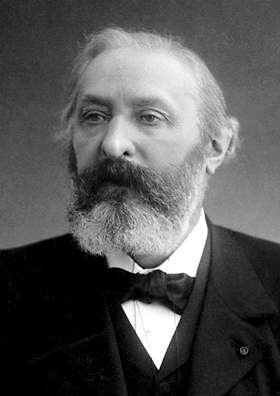
In the end, I did buy a real book to cut up. I tried hard to chose something of no real value, literary or otherwise, and of course ended up destroying the œuvre of the first nobel price for literature, Sully Prudhomme. Some days, you just can't win.

Wednesday, July 1, 2009

Oh, the shame

The "book of bad French poetry" I cut up for my iBook Mark I? I just googled the author, a certain Monsieur Sully Prudhomme. The first winner of the nobel price for literature, for, and I quote:

"in special recognition of his poetic composition, which gives evidence of lofty idealism, artistic perfection and a rare combination of the qualities of both heart and intellect" 

Oh, the shame...

image: wikipedia

iBook Mark I

A couple of weeks ago I had occasion to want a way to read a book on my iPhone discreetly (catholic wedding services are looong), and thus the idea of the iBible was born. Unfortunately I did not have enough time before the wedding, so I had to suffer through the sermon, but more on that tomorrow. This post is about how to make your very own iBook (couldn't find a bible at the flea-market), or just a book with a secret compartment.

Thisis also described in the Make weekend project 12


You'll need:


Wood glue and a book - hard-cover is best. I got this one for five francs at the flea-market last week-end. Next, dilute your wood-glue with water, about 50-50 should do. You want it quite runny, but still thick enough to glue the pages together.


Decide on the depth of your secret compartement, and put a blastic sheet between that and the rest of the book. Apply the wood-glue with a brush on the sides of your compartment. Then put some weight on your book (so the pages don't warp) and let dry.


Next, open up the book, get an exacto-knife and cut out your compartment.


Get your trusty glue again, and glue together the walls of your compartment  on the inside. Let dry under weight again.


Here is the end-result, the iBook! Now I can pretend to read bad french poetry from the 19th century, while secretly reading the latest fantasy-trash. This is of course only a first try, I still haven't given up on making an iBible!

Tuesday, May 26, 2009

Encyclopædia Britannica thinks I am a Web Publisher

Quite a while back, I think it was in December, I noticed that the Encyclopædia Britannica was offering free access to Web Publishers, and applied at once. Whatever a Web Publisher is (and the Encyclopædia doesn't include the term, funnily enough), the term appearantly includes small-fry bloggers too, because I just received an email that I've been accepted.

That means I can link to stuff on Britannica, and you can then go and look at it. I know, exciting, isn't it?

See for example this article about moths.

Nuts, isn't it?

Wednesday, May 20, 2009

Mi-Go

Sure, many people would think it is a moth. More fools they, when the thing staring at them is actually a Mi-Go from the frozen wastelands of Pluto.

The blasphemies which appeared on earth, it was hinted, came from the dark planet Yuggoth, at the rim of the solar system; but this was itself merely the populous outpost of a frightful interstellar race whose ultimate source must lie far outside even the Einsteinian space-time continuum or greatest known cosmos. 

 Oh aye, it is the winged horror, the fungoid abomination which hails from the darkest abysses of Yuggoth. The cries of it's worshippers, the hideous ululations of their twisted rituals have finally advised it of Pluto's reduction in status to dwarf-planet, and it has come in answer to visit wretched retribution on all the younger races...

Sunday, May 10, 2009

Dark Haven

I am a cad.

A while back I got an email by the most excellent Gail Z. Martin, asking me if I wanted to review her newest novel, Dark Haven, part three of the Chronicles of the Necromancer. She'd send me one, for free.

Clearly, Gail knows the way to my heart: Novel. Free. Aaand, you're in!

I got the novel by the end of March. So why did it take me more than a month to review it? Because I am a cad, that's why.

I didn't even notice at first that she even signed it for me:


 How awesome is that?

Anyway, onward to the review (read my review of The Summoner here):

We rejoin Martris Drayke and his friends, who finally put paid to Martris evil brother Jared and the Obsidian King in the novel The Blood King. The first two novels of the Chronicles of the Necromancer series are a self-contained story by the way. Dark Haven isn't, but fortunately Dark Lady's Chosen will be out by 2010.

But all is not well in Margolan. The country has been devasted by the war against Jared (and by Jared himself before that). Martris is all set to wed Princess Kiara of Isencroft, but Isencroft nationalists are very much against that, since this would eventually unite Margolan and Isencroft under the rule of Martris and Kiara. A good way to prevent that would be assasination...
While Martris has to deal with an insurrection of a southern lord, his companion Jonmarc has been made Lord of Dark Haven, the vampire stronghold. And not all vampires are happy with having a mortal lord...

So, what did I think about Dark Haven? First, the bad: Martris is still called Tris, and I still don't like the name ;)

Then, the good: Martin's writing keeps getting better. The characters have more depth to them, and I really liked the way all is not well in Margolan, even if the evil ursurper is gone. People are poor, starving, looking for scapegoats and generally miserable. The subplot with the vampires was very interesting - the moderate vampires that recognise that having a human lord will allay the suspicions  and predjudices of mortals, thus preventing another war, the hotheads (uh, figuratively. vampire=cold) that don't see why a mere mortal should hold power over them, the pragmatists who see that mortals are just better in caring about things like fields and crops... add to that all the vampire trouble is really the hero's fault, because they used vampires as shock-troops against Jared in the previous novels and so gave a taste of what it is like to hunt humans again to the more radical vampire elements - very nice.

So, Dark Haven gets a warm recommendation from me. Read it, it's fun. Also, go to Gail's website, where there's excerpts and maps and stuff.

And, Gail, thank you so much again for sending me Dark Haven for review!

Saturday, April 4, 2009

Ants dont have traffic jams

I love reading the citation alerts of the Physical Review Letters. PRL is a very high quality journal of course, which only accepts papers that are a maximum of four pages of length and report something significant - for a quite stringent value of significant as determined by the editors and reviewers.

So if I find a paper pertaining to my research I can be sure that it will be a good one - but that's not why I love PRL. I love PRL because between articles like "Valence Bond Glass Theory of Electronic Disorder and the Pseudogap State of High-Temperature Cuprate Superconductors" or "Entanglement, Nonlinear Dynamics, and the Heisenberg Limit" you will find gems like

Trafficlike Collective Movement of Ants on Trails: Absence of a Jammed Phase 
 John, A; Schadschneider, A; Chowdhury, D; Nishinari, K
 Abstract:
We report experimental results on unidirectional trafficlike collective movement of ants on trails. Our work is primarily motivated by fundamental questions on the collective spatiotemporal organization in systems of interacting motile constituents driven far from equilibrium. Making use of the analogies with vehicular traffic, we analyze our experimental data for the spatiotemporal organization of ants on a trail. From this analysis, we extract the flow-density relation as well as the distributions of velocities of the ants and distance headways. Some of our observations are consistent with our earlier models of ant traffic, which are appropriate extensions of the asymmetric simple exclusion process. In sharp contrast to highway traffic and most other transport processes, the average velocity of the ants is almost independent of their density on the trail. Consequently, no jammed phase is observed.


Not your typical physics paper! I especially like the idea of a bunch of theoretical physicist crouching on the parking lot of the Max-Planck Institute and observing ants...

The paper itself is quite interesting. They observed the traffic flow of ants on parts of unidirectional trails without branches, which you could compare to a piece of straight highway without exits or on-ramps. Surprisingly, they found that unlike humans, ants don't have traffic jams. The average velocity of cars on a highway decreases with increasing density - the cars bunch up and slow down. Not so ants: They scurry along happily, all with the same speed - with increasing density their speed distribution funcion just becomes a steeper gaussian - no one slows down, and no one overtakes!

The root of this phenomenon lies in their different "driving" behaviour. At low densities, humans speed along the highway seperately, each at his own speed. Ants, on the other hand, will assemble into small platoons or convoys, with each ant maintaining a fixed distance to the ant in front of it. So when the ant-density increases, the platoons will just get larger, and nobody has to slow down. Go ants!

Friday, March 27, 2009

Travelogue

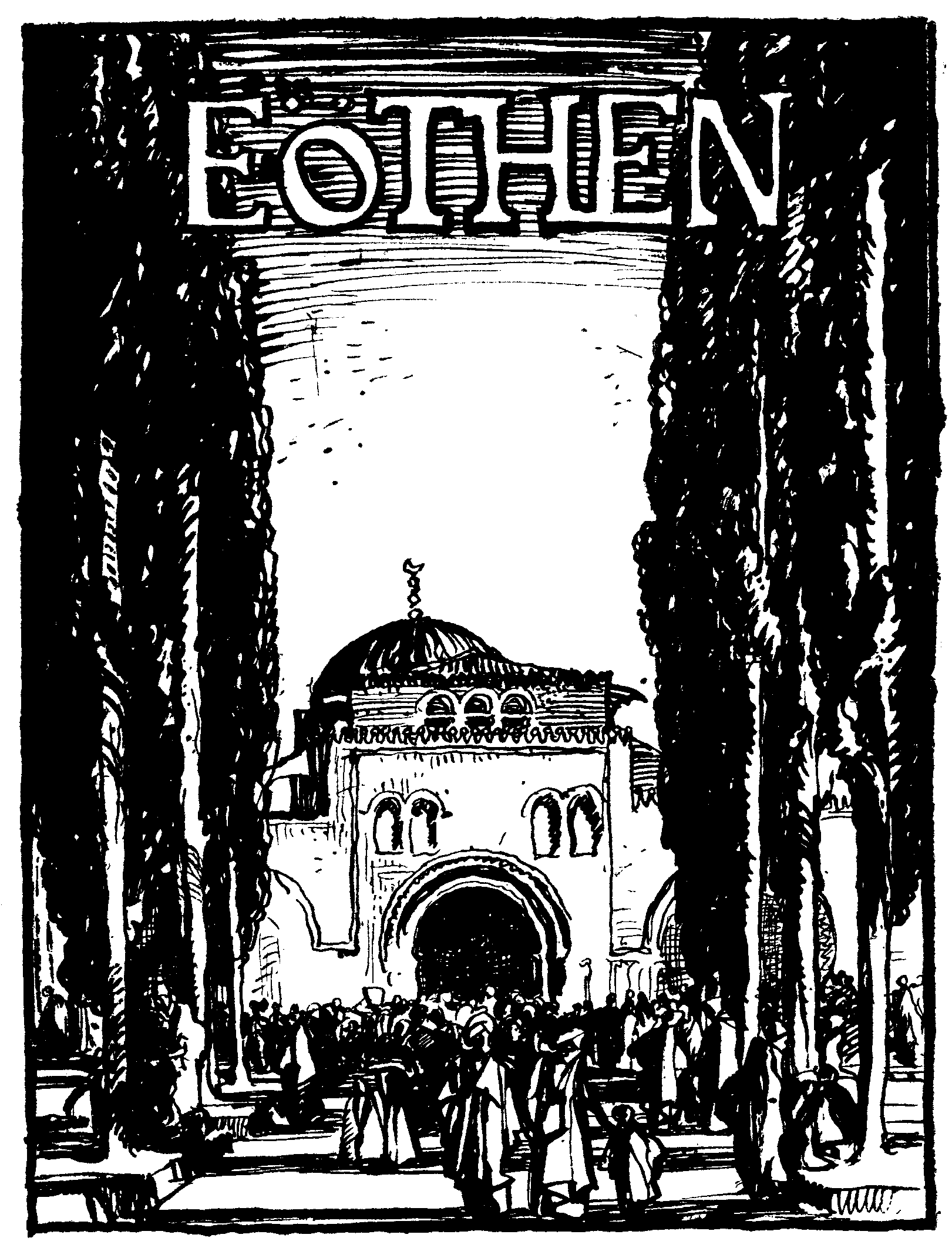
Eothen: Traces of Travel in the East by Alexander William Kinglake.

It was his Nigeness that  mentioned it on his blog recently. Eothen is an excellent insight not only into the Ottoman empire of the Victorian age, but also into the mind of an English gentleman, braveing the rigours of  travel, observing with a keen and faintly condescending eye, the people and customs that he encounters.Yet, he seems to be aware of the absurdity of this self-assumed superiority, so his remarks are also laced with irony:

But presently there issued from the postern a group of human beings - beings with immortal souls, and possibly some reasoning faculties; but to me the grand point was this, that they had real, substantial, and incontrovertible turbans. 
 From time to time Kinglake can also brutally honest with himself. See what he has to say when his companion falls ill:

I have a notion that tenderness and pity are affections occasioned in some measure by living within doors; certainly, at the time I speak of, the open-air life which I have been leading, or the wayfaring hardships of the journey, had so strangely blunted me, that I felt intolerant of illness, and looked down upon my companion as if the poor fellow in falling ill had betrayed a want of spirit. I entertained too a most absurd idea — an idea that his illness was partly affected. You see that I have made a confession: this I hope — that I may always hereafter look charitably upon the hard, savage acts of peasants, and the cruelties of a “brutal” soldiery. God knows that I strived to melt myself into common charity, and to put on a gentleness which I could not feel, but this attempt did not cheat the keenness of the sufferer; he could not have felt the less deserted because that I was with him. 

Kingslake doesn't loose himself into tedious linear descriptions of his route, daily routine or details. He just gives you the highlights, the amusing or interesting events - which incidentally makes this an ideal book to read in short bursts during your commute or in the bathroom.

Read it online here or here or download it from project Gutenberg.

Tuesday, March 10, 2009

The New Annotated Dracula

While waiting for my new iPhone to arrive (what, you expect me to have a life without my favourite electronic toy?), I pass the time by reading Leslie S. Klinger's "New Annotated Dracula". And when it says annotated, it means annotated: for every page of the original, there are two to three pages of annotation, describing the end of the 19th century, expounding on places mentioned by Stoker, etc.

Klinger does something I was first leery of, but which really pays off: He pretends, that Dracula was real, and that he forced Stoker to change parts of the story to protect his identity. This plot device allows Klinger to go on meandering asides over the nature of vampires, the real location of Draculas castle, etc. without compromising the information you get about the times and Stokers writing process (here, it is pretended that he assembled 'Dracula' from Harker's notes).

"The New Annotated Dracula" is not a book you devour in one sitting, and I wouldn't recommend it to readers new to Bram Stoker's Dracula. But it is an excellent book if you are interested in the times, something to peruse for half an hour or so at a time. Also, it is amazingly satisfying to read a big, heavy hardcover book again. I do have one serious complaint about it, though: the publisher really should have included on of those built-in string bookmarks. All my other "serious" hardcovers are making fun of it over it's lack.

Wednesday, January 14, 2009

Jailbreak

Yes, I finally did it, I broke my iPhone out of Apples confining App-store straightjacket. It was very straightforward, and now I can finally sync my Google calendar with the iPhone's calendar. Take hat, Jobs!

I have not really installed any free applications except for Nemussync (the aforementioned syncing) and Winterboard (prettying up and costumising the GUI). An Searcher (see screenshot of it installing to the right), which searches through all your contacts, events and sms.

The only application that seems not to be available in either the App-store or free repositories is an alarm clock that plays music in the morning. Why? To me, this is such a basic functionality. Why should I have to wake up to some ugly ringtone each morning, when there are four gigabyte of music on the damn thing? Why???

On a happier note, I must have read more than 10 000 pages on my iPhone already. Right now I am reading, or trying to read, Dumas' Le Comte de Monte-Christo. A book I like, and have read multiple times in it's German translation. The French original, however, proves to be less... accessible. But I shall persevere, and learn such important words as l'artimon (foremast) in the process.

Monday, January 12, 2009

Bad blurb

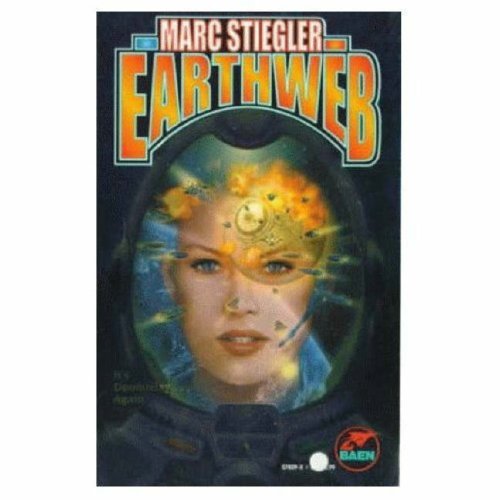
A couple of days ago I read the free ebook Earthweb, from Mark Stiegler, published in the Baen Free Library.

I only started to read it because I was immensly bored, and hadn't read anything of Stiegler before. I nearly dismissed it out of hand, because of this blurb:

Someone Out There really hated humans. Twenty years have passed since Shiva I first swept aside Earth's crude defenses and rained down destruction. Now Shiva V has entered the Solar System, more powerful than any of its predecessors.

The Shiva cannot be destroyed by fleets of ships: we tried, and it was the fleets that were destroyed. It cannot be defeated by a clandestinely developed super-weapon based on new principles of physics: no such weapon exists. It cannot be defeated by a forceful American President and his faithful generals: they do not know what to do.

There is only one way to defeat a Shiva: get inside and kill it. Once again, in the personae of five champions, four billion of us are about to do just that.

Whoever wrote that should be pelted with dead invertebrae. Because Earthweb is not a bad read. True, it is not one of the most original novels ever: The concept of sentinent robots out to kill biological life has been done before, and done better (most recently by Alistair Reynolds, and his books you should definitely read). The very interesting concept of crowd intelligence (people can bid on the likelihood of new ideas to be correct or to succeed in an open market, which is central to the novel, and not even mentioned in the blurb) has also been done before. But it is a nice novel to read, and maybe perfect for a long flight or trainride. And it is not just a tale of a couple of heros slugging it out with killer-robots, which is what I suspected from the last sentence of the blurb.
Rather, it deals with the impact of having the Earth threatenend every couple of decades on society, the influence of personal feelings on leadership, well, and killer robots. There are some killer robots as well.

Thursday, November 27, 2008

5kg book haul

Evil, evil Amazon had this 20% off for Swiss customers deal. 'Nuff said.


I got Anathem (which I have already pirated read, but need to own), the first two books of Hamiltons new Void trilogy and two of Steven Brust's Vlad Taltos-novels. I've read his Jhereg in French, and originally planned to read the others in French too, but I am feeling lazy at the moment.

Monday, November 24, 2008

Neal Stephenson: Anathem

I have been a Neal Stephenson fan for quite some time - since I started with Snow Crash and Diamond Age a couple of years ago. I also enjoyed Cryptonomicon immensly. Then I read Quicksilver, the first book of the Baroque Cycle. Then I slogged through Confusion, got bogged down, and raised my mud-covered hand to put it back on my bookshelf, where it still stands besides the System of the World, which I never even started. For some reason, the same qualities that made me love and reread Cryptonomicon - the meändering style, the complex story, the many characters (oh, what lovely characters, Jack, l'Emmerdeur, simply brilliant) - were somehow too present. Instead of adding to they took away from the story, they distracted me from the tale. Each time I was totally immersed into a storyline, the point of view would switch, leaving me stranded. It reminded me of the trouble I have had with Umberto Eco: I love Focault's Pendulum, but I never managed to finish The Island of the Day Before, even though I have tried multiple times.

Anyway, with Anathem Stephenson is back in style, and back to writing Science Fiction. The book embodies the best Science Fiction can be: A big idea, a gripping yarn and marvelous characters. It tells of a society where all scientists have retreated into convents, and are forbidden from practicing most of the technical sciences. No genetic manipulation, no computer science, no experimental physics, for thousands of years. Instead, they are sequestered into four different orders, which only have contact with one another and the outside world for ten days ever one, ten, hundred or thousand years, respectively. The reason for this is to preserve knowledge, even if the secular world descends into barbarism.

But as weird as this may sound, this is not the novel's Big Idea. Or rather, it is only one of several big ideas.  Another has to do with quantum physics and consciousness, and with the Anthropic Principle, and yet another with the viability of long-term organisations and planning. The book is fairly brimming with ideas, yet they do not detract from the story, only add to it. And - quite surprising for a story that reminded me of Eco's The Name of the Rose for the first few chapters - there is also space ships and EVA-battles in earth's orbit.

Did I like it? Well, let me put it this way: I read Anathem on my iPhone (which incidentally makes for quite a good ebook reader) after having it, ahem, acquired on the internet. I just placed an order for it with Amazon though, because this is a book I just have to have sitting on my bookshelf. Right next to the Baroque Cycle, come to think of it. Maybe I should try and have another go at that.

Thursday, October 30, 2008

Gail Martin Answers

Gail Martin, Author of The Summoner (reviewed here) and The Blood King (might be reviewed here soon), is doing her "Days of the Dead" blog-tour, and has graciously acquiesced to write a guest post about her Big Idea (a concept I shamelessly stole from John Scalzi) on my blog. So without further ado:


How did the idea for your novels came to you? What was the inspiration?
I created the character of Tris Drayke back in 1981, sitting in one of my college classes (and obviously not paying attention).  I use the term “created” loosely, since my characters tend to stride on stage in my imagination fully formed and present themselves, demanding to know where their book is.  (Strange but true.)  So I had the character but not a story to go with him.  Jonmarc Vahanian showed up in the next year.  The other characters pretty much appeared as they were needed as the plot began to evolve, but others showed up independent of plot and refused to go away until I wrote them in.  Some minor characters showed up with such a strong presence that they literally stole the scenes they’re in—much to my surprise.
I imagine this sounds very strange to a non-writer (and maybe to some writers—it works differently for each of us), but I’ve always considered myself more a stenographer to my characters than a god-like plot architect.  The characters do pretty much write themselves in that when I want to know more about them, I create a mental picture of the character and ask my questions and get answers.  Then the plot springs from the personalities and actions of the characters.  It’s kind of like taking notes on the movie that plays on the inside of my eyelids. 
As for inspiration, the books do weave together several favorite themes.  I’ve liked ghost stories and haunted houses for as long as I can remember.  The same is true for stories about vampires and magic.  I’ve also had a life-long fascination with folklore from around the world as well as mythology.  I essentially wrote the story that I wanted to read so that I could get to read it!  And while none of the characters is literally “me,” there are very clear elements of me in all of my characters if you know me well enough to know where to look.

Tuesday, October 28, 2008

T minus 2

That is right, a guest post is coming! Furthermore, it is not just a post by anybody, but by a real, honest-to-god published author. Stay tuned!

Tuesday, August 19, 2008

The Summoner - Review


Well, I certainly did not expect to hear from one of the authors of my last book haul! But Ms Martin did leave me a comment, which got her books bumped up my reading queue. Now I've finished reading the first, and there is what I think of it:

The Summoner, by Gail Z. Martin
A review


Martris Drayke is a prince. A second son, and quite content that he won't have to be king one day. Indeed, life for him would be quite spiffy, if his older half-brother were not a cruel psychopath, his father blinded by love, and his mother ineffectual.

And when his brother murders his family and seizes the throne, it is up to Martris and his companions to safe the day, the kingdom and the world... If Martris can safe himself from insanity as he comes into his birthright as a necromancer, that is.

I quite liked the idea of the "Chronicles of the Necromancer" duology. You don't often see a necromancer as the hero, and I was hoping for tale of dark magic, and the sacrifices made by fighting evil with evil.

But this is not the mood of "The Summoner" at all. Rather, it is typical "Epic Fantasy". Which is not necessarily a bad thing - and "The Summoner" is not a bad book, as long as you are not looking for anything original. The plot is of the typical "Quest to save the Kingdom"-variety. Engrossing, and fast-paced though - you won't be bored.

Unfortunately, it is very predictable. When the heroine was introduced in chapter five, it is immediately clear that she will fall in love with our hero - although they will dance around each other until near the end of the book. I also would have liked to see a bit more characterisation - Martris' companions Harrtruck and Soterius never did take on life for me, and I kept confusing them with each other.

Oh, and a final nitpick: I hate, hate, hate the protagonist's nickname "Tris". Sorry, I just do. If I were a Prince called Martris, I'd have anybody calling me "Tris" executed. At once. With blunt pliers.

In the end, "The Summoner" is a nice read despite it's faults, and I am looking forward to reading it's sequel, "The Blood King". And I am still hoping for some zombie action!

Wednesday, August 13, 2008

Monthly Book Haul

Ah, my good friend Amazon delivered my monthly book fix.

As usual, it is mostly fantasy and science-fiction, with one poetry book thrown in. I have become interested in poetry since I decided to leave comments in poetry-form on deviantart, so I thought I might learn something from the masters. I have never really read poetry before, except Milton's Paradise Lost, and a bit of Blake's Songs of Innocence and Experience, and I am curious if I will take to it.

Books from top to bottom:


Six Centuries of Great Poetry

The Blood King and
The Summoner, both by Gail Martin


Winterbirth, by Brian Ruckley

The Awakened Mage, by Karen Miller


The Elysium Commission, by L. E Modesitt

The Books of Martin and Miller (her second book should be along in a week or so) are somewhat of a rarity in the F/SF genre: duologies. For some reason most authors seem to prefer trilogies or monster series.

I may post some reviews once I am through them.

Sunday, June 29, 2008

English Book Haul


Curse you, Amazon! A pest on your tempting recommendation system!

Alas, I am weak, and so I succumbed to it's tempting siren song. Even though I have only read two of my new French novels...